

A Level Accounting tutor online (9706)
Taught for Cambridge (CAIE) and AQA.
At a glance
Our A Level Accounting tutors teach Cambridge International 9706 and AQA 7127. Live 1:1 or small-group online classes cover double entry, financial statements for sole traders, partnerships and limited companies, costing, budgeting and investment appraisal, with step-by-step practice on structured questions and the multiple-choice paper.
A Level Accounting key facts
| Cambridge (CAIE) | Cambridge International AS & A Level Accounting (9706), 4 papers/components (official syllabus) |
|---|---|
| AQA | AQA A-level Accounting (7127), 2 papers/components (official syllabus) |
| Cambridge May/June series | Exams run from late April to June; results are released in mid-August. |
| Cambridge October/November series | Exams run in October and November; results are released in mid-January. |
| Pearson Edexcel International A Level series | Exams are offered in January, May/June and October/November series. |
| UK A Levels (AQA, OCR, Pearson Edexcel) series | Exams run in May and June; results are released in mid-August. |
| Topics covered | 11 syllabus topics, with past-paper practice |
| Lesson format | Live online, 1:1 (60 min) or small group (75 min); first class free |
Facts last verified:
A Level Accounting is a practical choice for students heading towards accounting and finance degrees, professional qualifications such as ACCA or ACA, banking, or running a family business. It continues naturally from IGCSE or O Level Accounting, but students without prior study can succeed if they are comfortable with arithmetic and careful layout. The subject also complements Economics and Business by giving a precise, numerical view of how organisations record and judge performance.
Cambridge 9706 is staged. AS students take a one-hour multiple-choice paper and a longer Fundamentals of Accounting paper, and A Level students add a Financial Accounting paper and a Cost and Management Accounting paper. AQA 7127 is linear, with two three-hour papers sat at the end of the course: one focused on financial accounting and the other on accounting for analysis and decision-making, each mixing multiple choice, structured and extended questions.
Most lost marks come from presentation and small slips rather than misunderstanding. Statements of financial position that do not balance, missing headings and dates, and adjustments for accruals or depreciation posted to the wrong side are frequent problems. Written parts, where students must advise an owner or evaluate a decision, are often rushed. Our tutors practise standard formats until they become automatic, then train students to finish every calculation with a short, reasoned recommendation.
How is A Level Accounting (9706) examined?
Cambridge International AS & A Level Accounting (9706)
Official syllabus from Cambridge (CAIE)| Paper | Duration | Marks | Weighting |
|---|---|---|---|
| Paper 1: Multiple Choice | 1 hour | 30 | 28% of AS Level / 14% of A Level |
| Paper 2: Fundamentals of AccountingFour structured questions. | 1 hour 45 minutes | 90 | 72% of AS Level / 36% of A Level |
| Paper 3: Financial AccountingThree structured questions. | 1 hour 30 minutes | 75 | 30% of A Level |
| Paper 4: Cost and Management AccountingTwo structured questions. | 1 hour | 50 | 20% of A Level |
2026–2028 syllabus. Series: May/June and October/November.
AQA A-level Accounting (7127)
Official syllabus from AQA| Paper | Duration | Marks | Weighting |
|---|---|---|---|
| Paper 1: Financial accountingMultiple choice and short answers (30 marks), structured questions (40 marks), extended answers (50 marks). | 3 hours | 120 | 50% of A Level |
| Paper 2: Accounting for analysis and decision-makingMultiple choice and short answers (30 marks), structured questions (40 marks), extended answers (50 marks). | 3 hours | 120 | 50% of A Level |
Linear: all assessments at the end of the course in the same series.
Cambridge May/June series
Exams run from late April to June; results are released in mid-August.
Cambridge October/November series
Exams run in October and November; results are released in mid-January.
Pearson Edexcel International A Level series
Exams are offered in January, May/June and October/November series.
UK A Levels (AQA, OCR, Pearson Edexcel) series
Exams run in May and June; results are released in mid-August.
Exam facts last verified:
Plan your revision with our exam dates guide, the official A Level grade thresholds and where to find official past papers.
What topics are in A Level Accounting?
- 1
Types of business entity
Confusing the liability of partners with that of limited company shareholders.
- 2
The accounting system: double entry and books of prime entry
Posting both sides of a transaction to the same side of different accounts.
- 3
Accounting for non-current assets
Calculating depreciation for a full year when the question specifies a part-year policy.
- 4
Reconciliation and verification
Adjusting the bank statement for items that belong in the updated cash book.
- 5
Preparation of financial statements
Leaving out headings, dates or subtotals, which carry presentation marks.
- 6
Analysis and communication of accounting information
Calculating ratios but not explaining what change in performance they show.
- 7
Costs, cost behaviour and traditional costing methods
Using total cost instead of contribution when deciding whether to accept a special order.
- 8
Financial accounting (A Level): company statements, regulation and ethics
Treating a rights issue as if it were a bonus issue in the statement of changes in equity.
- 9
Business acquisition, merger and computerised accounting systems
Valuing goodwill without deducting the fair value of net assets acquired.
- 10
Activity based costing and standard costing
Labelling a variance favourable or adverse the wrong way round.
- 11
Budgeting, budgetary control and investment appraisal
Discounting cash flows correctly but ignoring non-financial factors in the recommendation.
Not sure which fits? Chat on WhatsApp
How do our online Accounting classes work?
Diagnostic
A short check of what your child already knows against the syllabus.
Topic teaching
Clear explanations on a shared whiteboard, one topic at a time.
Past-paper practice
Exam questions from your board, timed and marked to the mark scheme.
Feedback
What went well, what to fix and what to practise before next class.
Who teaches A Level Accounting?
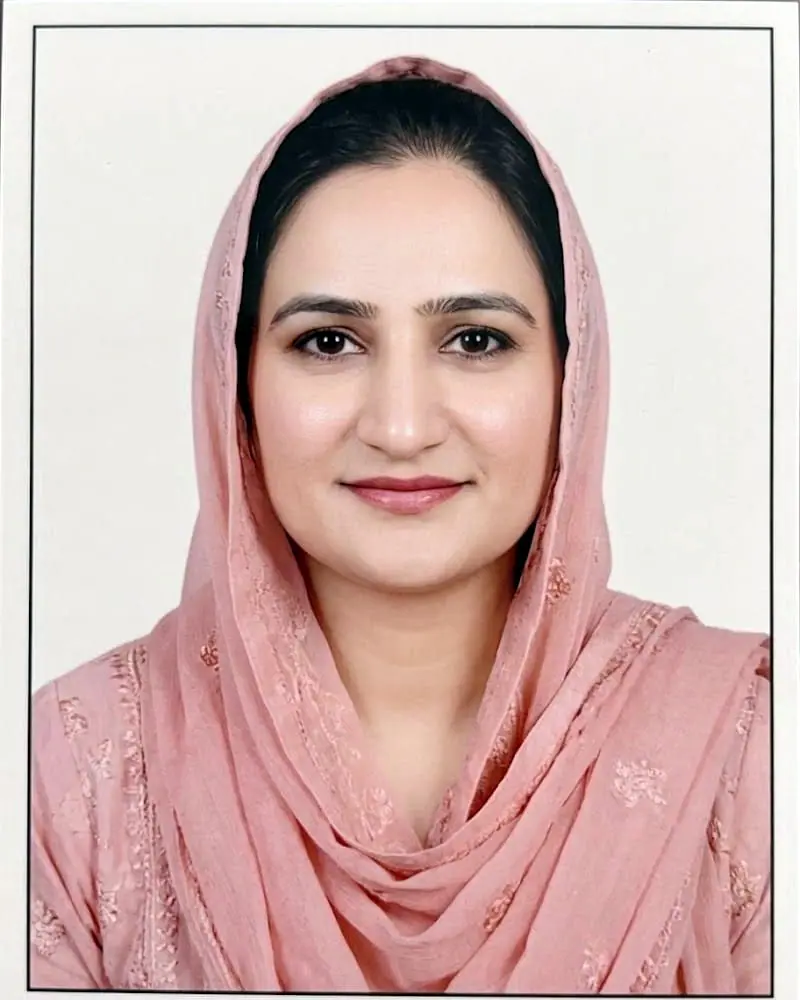 8 years
- Business
- Accounting
How do you get top marks in A Level Accounting?
Use full formats with names, dates and headings; presentation marks are easy to collect and easy to lose.
Show workings in clearly labelled notes so examiners can follow the figures that feed into each statement.
Check that a statement of financial position balances before moving on, and trace any difference quickly.
In multiple-choice questions, work each figure out on paper rather than estimating from the options.
Answer 'advise' questions with a clear decision supported by both the figures and a non-financial factor.
How much does A Level Accounting tutoring cost?
Prices shown in US dollars
- Recommended
One-to-one
Fully personalised to your child
USD 35 / class
- 60-minute live classes at times you choose
- A plan built from a diagnostic of your child's gaps
- Past-paper practice marked against the mark scheme
- Progress notes for parents
Small group
Up to 6 students, 8 live classes a month
USD 10 / class
- 75-minute live classes, 8 per month
- Taught to your exam board and syllabus code
- Weekly past-paper questions with feedback
- Class recordings and notes
Intensive exam prep
12 one-to-one classes a month before exams
USD 32 / class
- Three 60-minute classes a week
- Timed past papers and full mock exams
- Topic-by-topic weak-spot drills
- Pack discount of 10% applied
Prices are per class unless shown per month: one-to-one classes are 60 minutes and group classes 75 minutes. Your trial class is free and doesn't turn into a paid plan by itself. Pricing FAQ
A Level Accounting FAQs
How can I get an A* in A Level Accounting?
An A* in A Level Accounting comes from accurate double entry, consistently correct formats and well-reasoned written evaluations. Practise each type of financial statement until the layout is automatic, then work through timed past papers. Review mark schemes to see which headings and workings earn credit. Spend time on discussion questions, since they often separate the top grades.
Is A Level Accounting hard?
A Level Accounting is manageable for students who are organised and comfortable with numbers, but it demands precision. The concepts build logically from double entry, yet a single misplaced figure can unbalance a statement. The A Level content on company accounts, costing and investment appraisal is more demanding than AS. Regular practice with full questions keeps accuracy high.
Can I take A Level Accounting without O Level or IGCSE Accounting?
Yes, you can take A Level Accounting without O Level or IGCSE Accounting, because the AS content begins with the accounting system and double entry. Students starting fresh should expect to spend extra time on bookkeeping basics during the first term. Good arithmetic and tidy presentation matter more than prior knowledge.
Does A Level Accounting help with ACCA?
A Level Accounting gives a useful grounding for ACCA and other professional accountancy qualifications, because it covers double entry, financial statements and management accounting. It does not replace any professional exams. Exemption policies are set by the professional bodies and can change, so check their published rules directly.
Which A Level subjects go well with Accounting?
Business, Economics and Mathematics are the most common subjects taken with A Level Accounting. Business provides the organisational context, Economics explains markets and policy, and Maths supports statistics and finance. Students aiming for accounting or finance degrees should check whether their chosen universities prefer Maths among their A Levels.
Still deciding? Ask us on WhatsApp
Related subjects and guides
- A Level Business
- A Level Economics
- O Level Accounting
- A Level Maths
- A Level Further Maths
- All A Level subjects

How to Choose an Online O Level or A Level Tutor: A Checklist for Parents
A parent's checklist for choosing an online O Level or A Level tutor: syllabus codes, exam board experience, timezones, safeguarding and the trial class.
8 min readUpdated
A Level vs FSc: Which Is Better for Medicine, Engineering and Abroad?
A Level vs FSc compared for Pakistani students: IBCC equivalence, FSc marks, PMDC and PEC entry rules, study abroad and costs, so you can choose your route.
9 min readUpdated

How to Get an A* in A Level Maths (9709): Paper-by-Paper Strategy
An A* in Cambridge A Level Maths 9709 needed 222/250 in June 2026. Here is how to win marks on Pure 1, Pure 3, Mechanics and Statistics, plus Edexcel IAL.
9 min readUpdated


Try a free A Level Accounting class
Tell us the curriculum and subject. We'll match a specialist tutor in your timezone.